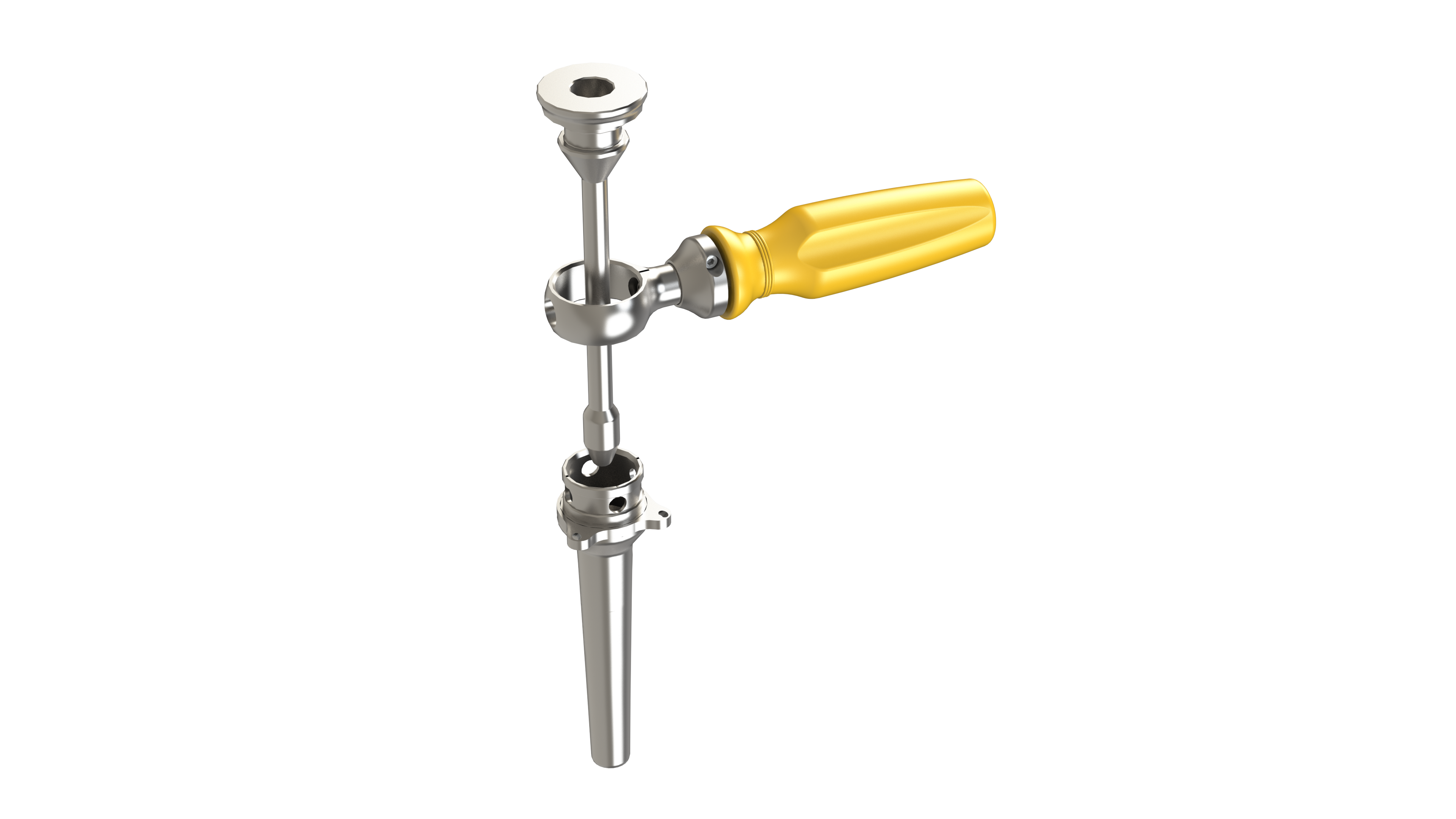
Semi-Extended Tibia Nail Instrumentation
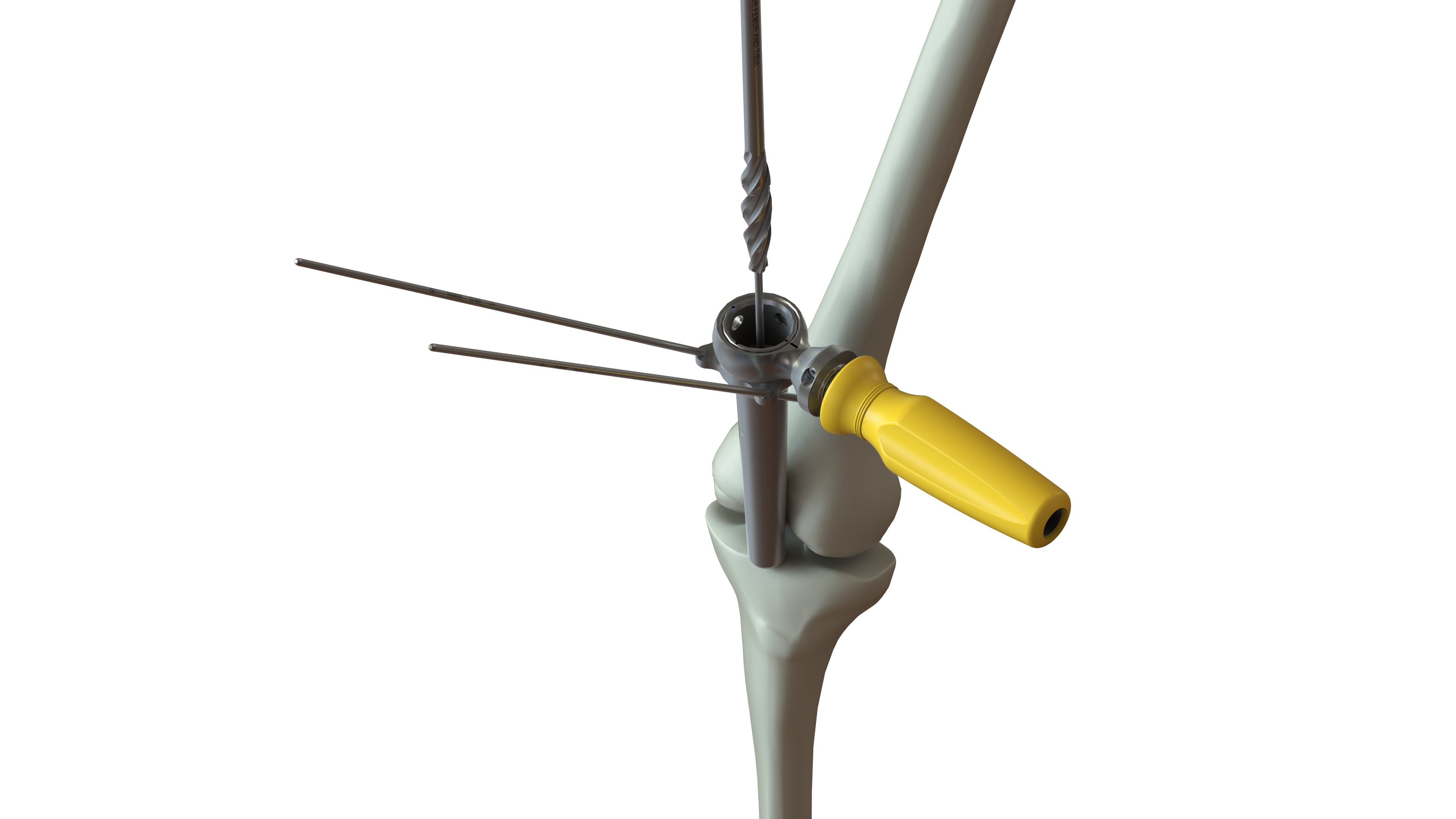
The semi-extended approach is particularly valuable for very proximal tibia fractures where reduction via traditional approaches is difficult. Hyper-flexing the knee to gain access to the tibial plateau makes proper fracture reduction near impossible. My engineering director had developed the semi-extended surgical technique while at Smith & Nephew, and at OIC we had the opportunity to build purpose-built instrumentation for it.
The system was designed as an add-on tray insert and enhanced OIC's existing IM nail platform — keeping it modular and high-value.
Extended Guide Handle
Large stainless steel guide handle that attaches to the nail with a long cannulated guide bolt and to the existing tibia nail screw targeter. Big part with tight tolerances and lots of mating parts.
Cannula Locking Handle
Spring loaded hollow pin locking mechanism with intuitive and easy actuation. Open architecture for cleanability/autoclave.
Cannula Sleeves
Straight and tapered cannula sleeves designed with divergent pin holes for anchoring to the femur. Sized to accommodate the entire range of OIC tibia nail lengths and diameters.
Trocars
Standard and specialty adjustment trocar allowing the surgeon to place a pin 4.25mm in any radial direction for entry point adjustment.
Flexible Reamer Shaft Extension
Specialty extension for the OIC flexible reamer shaft to reach through the entry cannulas.
Add-on Tray Insert
Integrated with existing IM nail system rather than requiring a new tray, reducing hospital inventory burden.
Full instrument design and V&V testing. Supplier coordination and purchasing. Managed the regulatory submission and PLM. Almost zero revisions after FDA approval.
FDA cleared and launched (OIC announced August 2018). Enabled surgeons to treat difficult proximal tibia fractures with the suprapatellar technique.